

Optimal Maternal Positioning: How Your Body Position Affects Labour Progress
As a birth educator on the Central Coast for the past decade, I've seen firsthand how something as simple as changing position during labour can transform a woman's birth experience. Yet despite the growing research supporting movement and positioning during labour, many birthing people still spend hours labouring on their backs, a position that works against gravity and can actually slow labour down.
This is where Optimal Maternal Positioning (OMP) comes in, and it's something I'm passionate about teaching expectant parents here on the Central Coast after becoming certified in this evidence-based approach.
What is Optimal Maternal Positioning?
Optimal Maternal Positioning (OMP) is a comprehensive framework created by Ginny Phang-Davey that uses specific body positions, movements, and alignment protocols during pregnancy and labour to help your baby navigate through your pelvis more easily. It's based on understanding the biomechanics of birth and a key concept that's central to OMP: having a baby pass through the pelvis is like putting a key through a keyhole.
If the keyhole (your pelvis) isn't aligned properly, the key (your baby) may struggle to pass through smoothly. OMP teaches you how to create space within that keyhole so your baby can enter and rotate through much more easily.
Think of your pelvis not as a fixed ring of bone, but as a dynamic structure. OMP emphasises that "bones float in soft tissues". During pregnancy and labour, hormones like relaxin soften the ligaments connecting your pelvic bones, allowing your pelvis to actually expand and shift shape. The position you're in determines how much space is available at different stages of labour.
The OMP Concept of Dynamic Equilibrium
At the heart of OMP is the concept of maintaining "dynamic equilibrium" during pregnancy. Imagine your uterus as a hot air balloon floating within your pelvis. When everything is balanced and aligned, your baby has optimal space to position themselves and move through the birth canal.
This dynamic equilibrium is crucial because:
It creates alignment first, which enables mobility
It allows your baby's cardinal movements to facilitate labour progress
It can lead to a more comfortable pregnancy and easier birth
It helps prevent labour from stalling
The OMP approach focuses on pelvic alignment FIRST, then pelvic mobility, and finally active birth positions during labour.
Why Position Matters in Labour
Your baby needs to navigate through your pelvis in a series of movements called cardinal movements: descending, flexing their chin, rotating, and extending their head as they're born. Every position you adopt either helps or hinders these movements.
Here's what the research tells us:
Upright and mobile positions during labour:
Increase pelvic dimensions by up to 30%
Shorten the first stage of labour by approximately one hour
Reduce the need for epidural analgesia
Decrease the likelihood of instrumental birth (forceps or vacuum)
Improve your baby's oxygen supply
Lying flat on your back (supine position):
Narrows the pelvic outlet
Works against gravity
Can compress major blood vessels, reducing blood flow to your baby
Is associated with more painful contractions
Yet in many Australian hospitals, continuous fetal monitoring and epidural analgesia can inadvertently limit movement and positioning options. This is why learning about OMP protocols before labour begins is so important.
OMP Pelvic Alignment Protocols for Pregnancy
OMP teaches specific alignment protocols to use during pregnancy to help create balance in your pelvis and encourage optimal foetal positioning. These aren't just comfort measures. They're strategic techniques to prepare your body for birth.
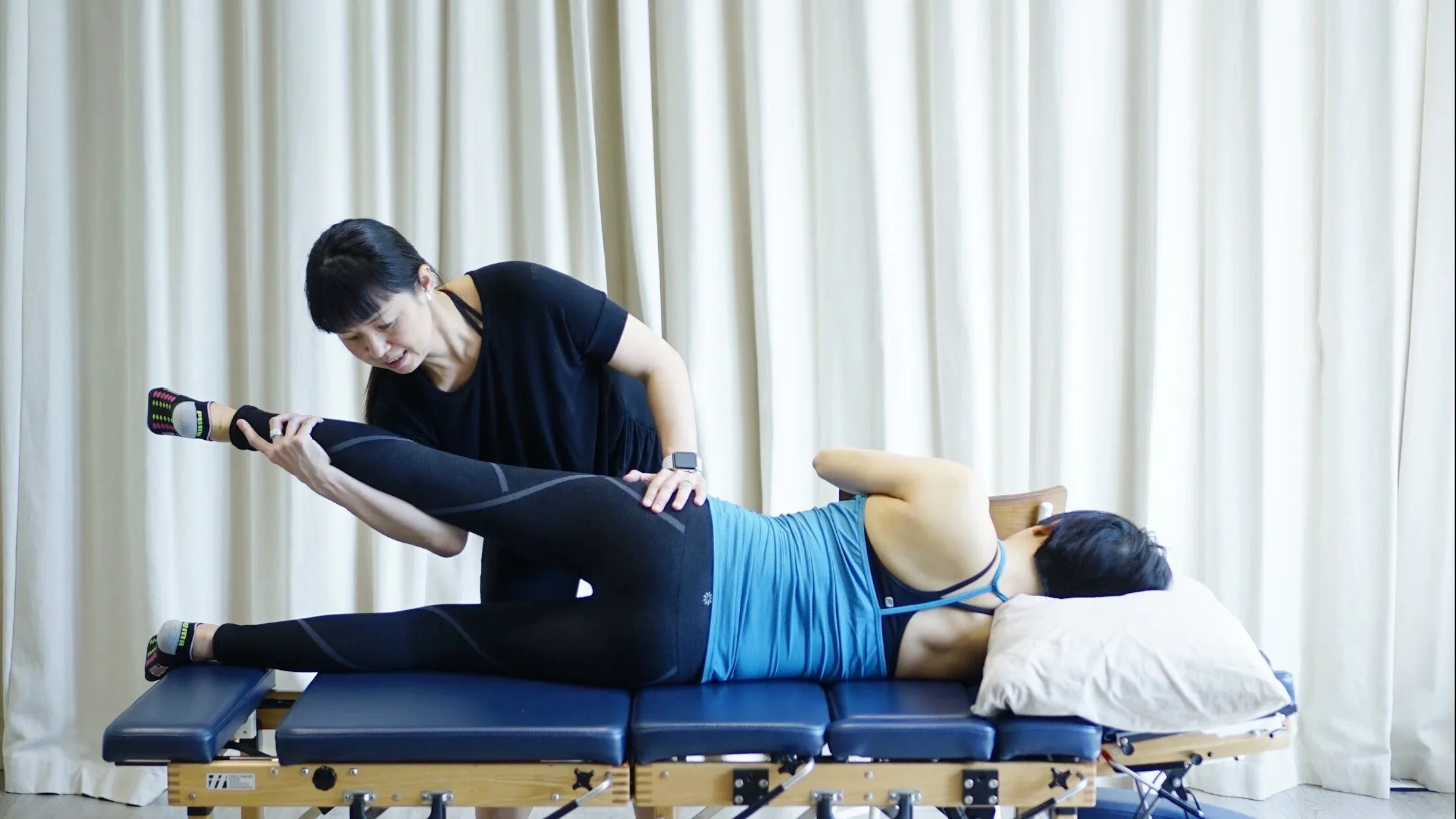
OMP Pelvic Side-Lying Release (PSLR)
This is typically safe before and throughout pregnancy, even into early labour, and should be done on both sides. It helps to:
Balance and relax the pelvic floor
Lengthen and loosen the round ligament and psoas muscle
Release the iliotibial band and fascia on the outside of the thigh
You need to hold this stretch for a minimum of 3 minutes with proper alignment maintained.
OMP Forward Leaning Inversion
This technique helps to untwist the ligaments of the uterus and creates room for baby to move into position. It also helps the cervix to dilate more easily during labour. This is a very slow, controlled movement done with specific breathing patterns—not something to rush.
Note: Don't do this if you have high blood pressure, hypertension, dizziness, reflux, heartburn, glaucoma, sinus problems, head cold, or if you're at risk of stroke.
OMP Abdominal Sifting
Also known as "shaking the apple tree," this technique uses a rebozo (long cloth) to gently jiggle the hips and release tension, creating space for baby to move.
Daily Maternal Movements and One-A-Day Stretches
OMP includes specific daily routines that pregnant people should do to maintain alignment throughout pregnancy. Many of my clients report that doing these daily movements from 34 weeks made a significant difference in how their labour progressed.
OMP During Labour: The Three Levels of the Pelvis
OMP teaches that labour progresses through three levels of the pelvis (the inlet, mid pelvis, and outlet) and different positions and protocols work best for each level.
Greater Pelvis and Inlet
When your baby is working to enter the pelvis (at the inlet), specific techniques can help:
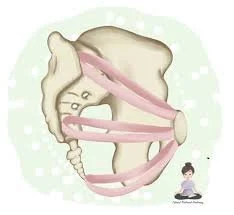
Image from OMP:
Abdominal Lift and Tuck: During contractions, this helps position your baby optimally to enter the pelvis. Your partner can help support you in this position.
Hip Extensions: These movements help create space at the inlet for your baby to descend.
Mid Pelvis
When your baby is navigating through the middle of your pelvis, rotation is key:
Asymmetrical positions become particularly important here. These are positions where one side of your body is doing something different than the other, creating space for baby to rotate.
The Frog Maneuver: A specific OMP technique for the mid pelvis that helps facilitate baby's rotation.
Outlet Pelvis
As your baby is moving toward birth, these positions maximize space:
Kabyle Position: A specific squatting variation that opens the outlet
Arch Back Squat Lunge: Combines the benefits of asymmetry with the outlet-opening properties of squatting
Duck Walk: Helps open the outlet while encouraging baby to descend
OMP Pelvic Mobility Protocols During Labour
OMP categorizes movement during labour into specific protocols that you and your support team can use strategically:
OMP Pelvic Transitions (2.0)
These are movements that transition you from one position to another while maintaining pelvic mobility.
OMP Pelvic Tilts (2.1)
Specific tilting movements that can be done in various positions: standing, kneeling, on hands and knees, or side-lying. These aren't just general "pelvic rocks". They're strategic movements to create space where your baby needs it.
Hip Extension and Flexion of the Femur (2.2)
These movements involve extending and flexing your hip joint to change the shape and space available in your pelvis.
Asymmetry of the Femur (2.3)
Creating asymmetry (having one leg doing something different than the other) is powerful for helping baby navigate and rotate.
External and Internal Rotation of the Femur (2.4)
Rotating your femur (thigh bone) in or out changes the dimensions of your pelvis in specific ways that can help labour progress.
OMP Comfort Measures
OMP also includes specific comfort measures that partners can provide. These are precise pressure points that offer pain relief:
Bottom of sacrum (3.1)
Top of the sacrum (3.2)
Front of tubercles (3.3)
Top of tubercles (3.4)
Bottom of sitz bones / Cook's Pressure (3.5)
These aren't just generic massage. They're strategic pressure points that can significantly reduce discomfort during contractions.
OMP Active Birth Positions
OMP teaches that "active birth positions" are different from just "being upright." They involve specific maternal movements and positions that work with your body's design. These can be practiced with props like:
Birth ropes (for support and counter-pressure)
Birth balls
Stools
Squat bars
Many of my Central Coast clients find that practicing these positions before labour—so they become second nature—makes a huge difference when labour begins.
When Labour Stalls: OMP Troubleshooting and Reversing Protocols
One of the most valuable aspects of OMP is that it teaches WHAT to do when labour stalls or isn't progressing as expected. This is where many birth education programs stop. They tell you what COULD happen, but not what to DO about it.
OMP includes specific "reversing protocols", techniques to use when labour progress slows or baby seems stuck. Rather than immediately moving to medical intervention, these protocols can help turn things around.
This is particularly valuable for anyone hoping for a VBAC (vaginal birth after caesarean), as OMP techniques have helped many people achieve vaginal births after previous caesareans.
Positioning During Pregnancy: Setting Up for Success
OMP isn't just for labour—it starts during pregnancy. The way you sit, stand, and move in your third trimester can encourage your baby into an optimal position (head down, ideally positioned) before labour even begins.
Daily activities that support OMP principles:
Sitting with your knees lower than your hips (use a birth ball)
Leaning forward while sitting rather than reclining back
Regular walking
Swimming (we're lucky to have beautiful pools and beaches here on the Central Coast)
Doing your OMP daily routine and one-a-day stretches
Avoiding deep reclining positions that tip your uterus backward
The OMP concept emphasises that you can't necessarily control what position your baby prefers, but you CAN create more space within your pelvis to allow your baby to enter and rotate through more easily.
How Partners Can Support Using OMP
Partners play a crucial role in OMP. In my classes, I teach partners:
How to help with the Pelvic Side-Lying Release safely
How to apply OMP comfort measures (the specific pressure points)
How to support you in various OMP active birth positions
When and how to suggest specific positions based on where baby is in the pelvis
How to use props like birth ropes and rebozos
The beauty of OMP is that it's not guesswork. There's a systematic approach based on where your baby is and what they need to do next. Partners who understand OMP can be incredibly effective support people.
What About Epidurals?
Many people worry that an epidural means they can't use OMP principles. Not true! While epidurals do limit mobility, you can still change positions regularly and use many OMP techniques. I teach partners how to help with position changes even with an epidural in place, including:
Side-lying with specific leg positioning
Using a peanut ball in OMP-informed ways
Supported positions
OMP pelvic tilts that can be done while in bed
Regular position changes (even every 30 minutes) using OMP principles can continue to help your baby navigate through your pelvis.
Creating Your Birth Plan Around OMP
If OMP is important to you, here are some points to include in your birth preferences:
"I've trained in Optimal Maternal Positioning and plan to use specific movements and positions during labour"
"I'd like intermittent monitoring (if appropriate) to allow freedom of movement"
"I'd like access to tools: birth ball, mat, stool, squat bar, birth rope if available"
"My partner is trained in OMP support techniques and comfort measures"
"If I choose an epidural, I'd still like support with regular position changes using OMP protocols"
Most Central Coast maternity services are supportive of movement and positioning, and being specific about OMP can help your care team understand that you're not just wandering around randomly. You're following an evidence-based framework.
The Bottom Line
Your body is designed to birth your baby, and OMP is one of the most comprehensive, strategic approaches to supporting that process. When you understand that having a baby pass through your pelvis is like putting a key through a keyhole, and you learn how to align the keyhole and create space within it, you're working WITH your body rather than hoping for the best.
This is why I became certified in Optimal Maternal Positioning. I've seen too many labours where simple OMP protocols made all the difference, turning what could have been a caesarean into a vaginal birth, or shortening labour by hours. I want every expectant parent on the Central Coast to have this knowledge before their labour begins.
OMP gives you the confidence to know WHAT to do, HOW to do it, WHEN to do it, and most importantly WHY you're doing it. It's not just random position changes—it's strategic, evidence-based, and empowering.
Learn OMP at Birthability
If you're interested in learning Optimal Maternal Positioning techniques and how to use alignment protocols during pregnancy and strategic positions throughout your labour, this is a core component of my birth education classes at Birthability as a Certified OMP Parent Educator on the Central Coast, We don't just talk about it. We practice the protocols, learn the biomechanics, understand the three levels of the pelvis, and ensure your birth partner knows exactly how to support you using OMP techniques.
Birth education isn't about memorising information; it's about truly understanding how your body works and having practical, proven skills you can use on the day.
Ready to feel confident and prepared for your birth using OMP? Contact me at Birthability to learn about upcoming Central Coast birth education classes. keen for an online course - Click here to do the OMP for parents online course: CLICK
Let's make sure you and your partner have all the OMP tools you need for an easier, smoother birth experience. With 10 years of experience and certification in Optimal Maternal Positioning, I'm here to help you prepare for the birth you want using proven techniques that enable labour to progress.
